

Targeted treatment for certain back, neck and nerve-related conditions
Back or neck pain can sometimes be linked to irritation around the spinal nerves, joints or other structures. When this is identified as a likely source of your symptoms, a spinal injection may be considered as part of your care.
At Xcel Health, treatment starts with a clinical assessment to understand where your symptoms are coming from and whether an injection is appropriate for you.
Talk to Our Experts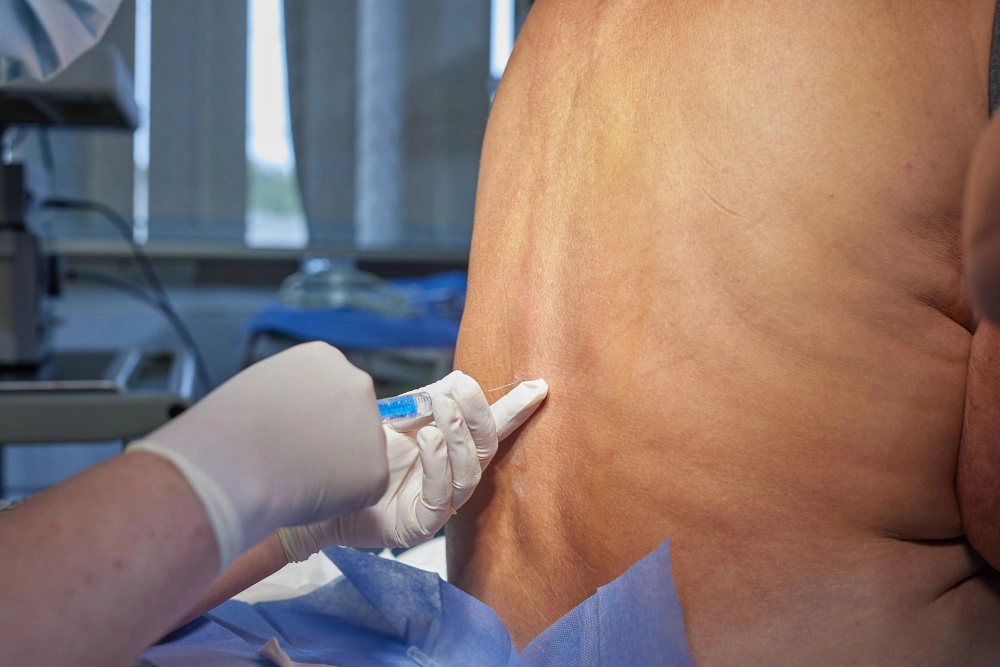
Click below to get your free brochure

What are spinal injections?
Spinal injections are targeted treatments that deliver medication to a specific area around the spine. Depending on your symptoms and clinical findings, treatment may be directed towards:
Spinal nerves
Facet joints
Sacroiliac joints
Areas of muscular pain
Other contributing structures
The medication used may include a local anaesthetic, a corticosteroid, or a combination of medicines, depending on the type of injection and your individual circumstances.
When could a spinal injection be considered?
A spinal injection may be considered when pain or irritation is affecting your back, neck, buttocks, arms or legs. Depending on the underlying cause, treatment may be relevant for symptoms associated with:
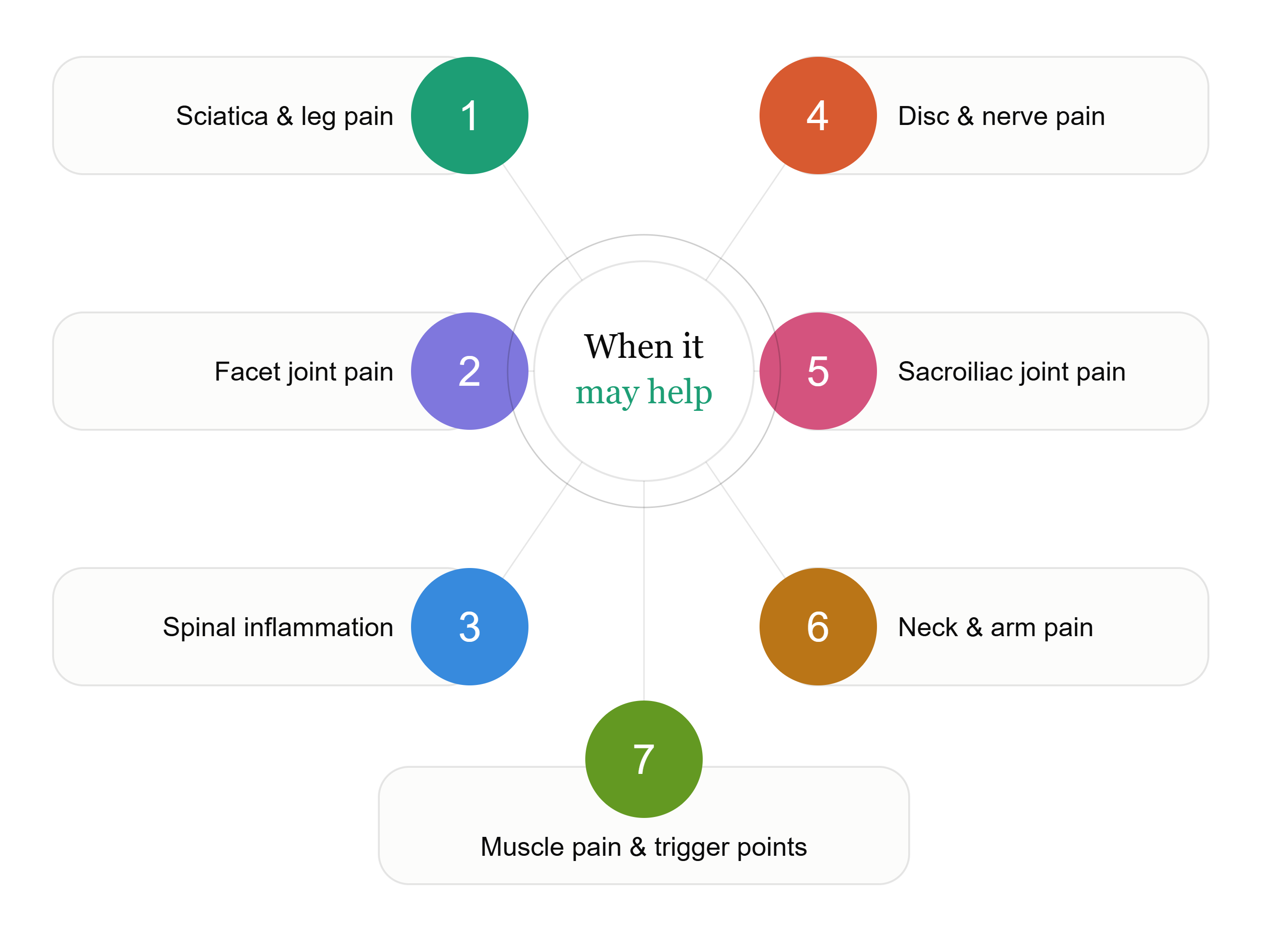
An injection is not suitable for every type of back or neck pain. Your clinician will assess your symptoms and medical history before recommending treatment.
Spinal Injection Treatments
The type of injection used depends on the structure thought to be contributing to your symptoms.
1
Epidural injections
Delivers medication into the epidural space around the spinal nerves. May be considered for certain types of back or neck pain associated with nerve irritation, including some cases of sciatica.
2
Caudal epidural injection
Delivered through the lower part of the spine near the tailbone. May be considered where lower back or leg symptoms are associated with irritated spinal nerves.
3
Sacroiliac joint injection
Targets the sacroiliac joint, which connects the lower spine to the pelvis. May be considered when assessment suggests this joint is contributing to lower back, pelvic or buttock pain.
4
Facet joint injection
Facet joints help the spine bend and rotate.Can be considered when these small joints are thought to be contributing to neck or back pain.
5
Trigger point injection
Targets specific areas of painful or tight muscle. May be considered for muscle-related pain, including trigger points around the neck, shoulders or lower back.
6
Nerve-related injections
A targeted nerve injection or nerve block for irritation of a particular spinal nerve. Can be relevant to certain forms of radiating arm or leg pain.
What can spinal injections help with?
1
Reducing pain and inflammation
2
Easing irritation around a spinal nerve
3
Improving everyday comfort
4
Making movement and exercise easier
5
Supporting physiotherapy and rehabilitation
6
Helping identify contributing structures
The response varies from person to person, and an injection does not guarantee complete or permanent pain relief.
Could physiotherapy be right for you?

 Book a free taster session
 Book an appointment
Your assessment comes first
Before recommending spinal injection therapy, our clinician will discuss your symptoms, medical history and previous treatment. Your assessment may include:
1
Discussing your symptoms
We look at where you feel the pain, how it behaves and whether you have symptoms such as tingling, numbness or pain travelling into an arm or leg.
2
Clinical examination
Your movement, strength and other relevant signs are assessed to help identify possible sources of your symptoms.
3
Reviewing investigations
Where appropriate, previous imaging or other clinical information may be reviewed to support treatment planning.
4
Discussing your options
If an injection could be appropriate, we'll explain the proposed treatment, expected benefits, possible risks and alternatives before proceeding.
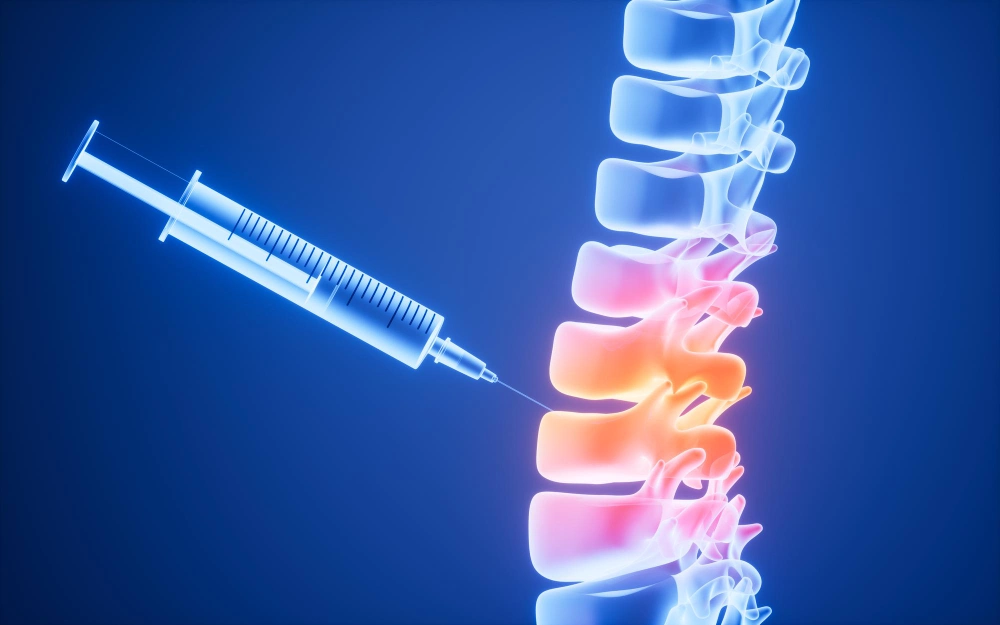
Injection Therapy as part of your wider care
A spinal injection is not necessarily the whole treatment. For some patients, reducing symptoms can create an opportunity to work more effectively on movement, strength and rehabilitation. Your clinician may therefore recommend physiotherapy, exercise or other appropriate care alongside the injection.
Reduced symptoms can support more effective rehabilitation
Physiotherapy and exercise are considered alongside your injection
Your wider recovery is the focus, not just short-term relief
The aim is to make the treatment relevant to your wider recovery, rather than viewing the injection in isolation.
Is spinal injection therapy right for you?
There is no single injection that suits every back or neck condition. The right approach depends on factors such as:
Your diagnosis
Location & pattern of pain
Nerve-related symptoms
Medical history
Previous treatments
Relevant scans or investigations
Your treatment goals
Our team will explain whether spinal injection therapy is appropriate and what other options may be available.
Book a spinal injection assessment
Areas we serve
We support people across Kent and South East London with personalised specialist care, including:
FAQs
An epidural places medication into the space around the spinal nerves. It can be considered for certain forms of back or neck pain associated with nerve irritation, including some cases of sciatica.
They may help some people with sciatica when the symptoms are linked to an irritated spinal nerve. Suitability depends on the cause and pattern of your symptoms, so an assessment is important before treatment.
Not always. "Spinal injection" describes a range of procedures targeting different structures. Some use corticosteroid medication, while others may involve local anaesthetic or a combination, depending on the treatment being provided.
Not everyone will require the same investigations. Your clinician will consider your symptoms and clinical findings and may recommend imaging where it is needed to support diagnosis or treatment planning.
In many cases, rehabilitation remains an important part of care. If reducing your symptoms allows you to move and exercise more comfortably, physiotherapy can help address strength, mobility and function alongside the injection.
The response varies considerably. Some people experience temporary relief, while others may experience a longer period of improvement. An injection should not be presented as a guaranteed or permanent solution.
Spinal injections are routinely used in clinical practice, but like any medical procedure, they carry potential risks and side effects. Your clinician should discuss the relevant risks, benefits and alternatives with you before treatment.
You do not need to know which injection you need before your appointment. Start with an assessment. The clinician can review your symptoms and determine whether spinal injection therapy or another treatment approach is more appropriate.
Which injection is right for you?
Not sure which injection therapy is best suited to your needs? Our 30-minute one-to-one consultation gives you the opportunity to discuss your symptoms and explore suitable options, including Steroid, Ostenil, Durolane, Spinal, PRP and Arthrosamid.
£85 · 30 minutes
Book a Consultation
Consultation only. Where availability allows, treatment may be provided on the same day at an additional cost.
Testimonials

Xcel Health is quick and easy to book and I received a thorough investigation and diagnosis. After treatment I achieved a great result. Would highly recommend Mr Xavier Rajarathnam.
A friendly, professional and clean practice. This was my first visit and Harsh Modi was very helpful and informative. He showed the utmost professionalism, care and consideration throughout.
I firmly believe regular maintenance appointments have helped to keep me fit and healthy, I always feel so much better after my visits, improving my back and hip flexibility. Why shouldn't we maintain our bodies as we would our car!
I was weary going through physio again as I had it years ago and didn't help much but Palak has been brilliant so far and even tries to help keep my 1 year old occupied, lovely lady to be working with.
Xcel Health blogs
 Physiotherapy . Drashti

 PRP Injection .
 Back Pain . Aashna Jain