

Physiotherapy Services at Xcel Health in Kent
At Xcel Health, we provide personalised physiotherapy to help you recover from pain, injury, and movement limitations. Our approach is focused on understanding the root cause of your condition and guiding you towards long-term recovery not just short-term relief.
Whether you're dealing with everyday aches or a sports-related injury, our team is here to support you with expert care and practical treatment plans tailored to your needs.

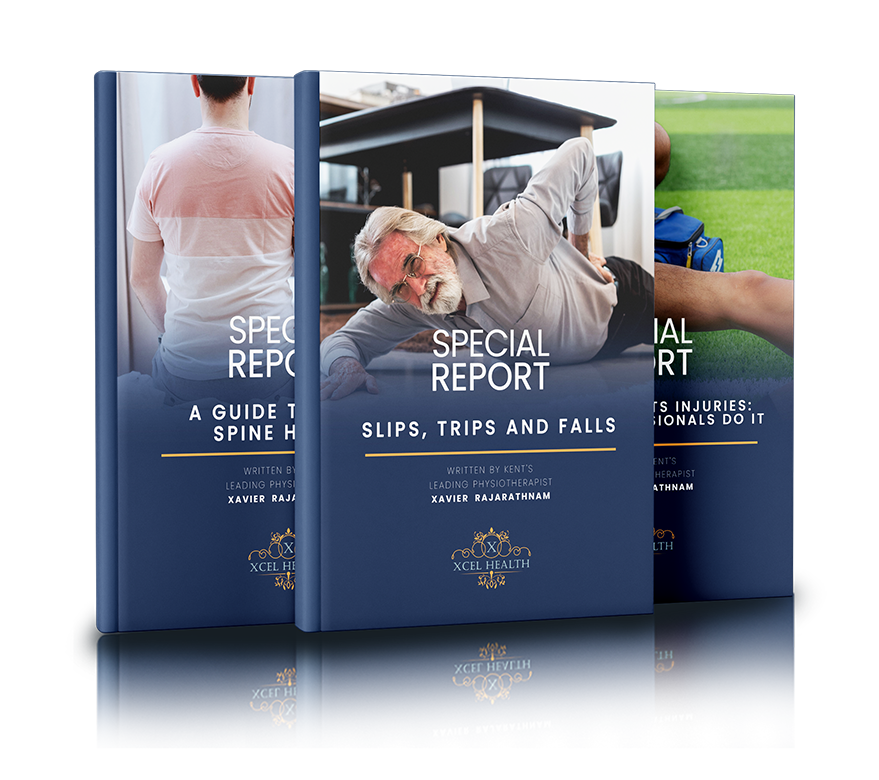
Click below to get your free brochure
Conditions We Treat
We offer targeted physiotherapy for a range of common conditions:

Knee Pain Physiotherapy

Elbow Pain Physiotherapy

Shoulder Pain Physiotherapy

Sports Injury Rehabilitation

Neck Pain Physiotherapy

Back Pain Physiotherapy

Pelvic Pain Physiotherapy

Work Related Injury
Each treatment begins with a thorough assessment to understand your symptoms, movement patterns, and lifestyle factors so we can create a plan that works for you.
Could Physiotherapy be Right For You?

 Book a FREE taster session
 Book an appointment
Our Approach to Recovery
At Xcel Health, we combine clinical expertise with a patient-focused approach:
Detailed initial assessment
Personalised treatment plans
Hands-on therapy and mobilisation
Exercise-based rehabilitation
Posture and movement correction
Advice to prevent future injuries


Areas We Serve
Our goal is to make high-quality physiotherapy accessible, wherever you are.
We provide physiotherapy services across multiple locations, including:
FAQs
Yes, absolutely. We understand that starting physiotherapy can feel like a big step, so we offer the opportunity to speak with a physio beforehand. You can contact us to arrange a free discovery visit or discuss your concerns before committing to treatment.
Wear comfortable clothing that allows easy access to the affected area. For example, shorts may be helpful for knee or lower back issues. Your physiotherapist will always aim to keep you as comfortable as possible and only ask you to remove minimal clothing if necessary for assessment or treatment.
NHS physiotherapy services can involve long waiting times and may often be delivered remotely via phone or video consultations. Private physiotherapy typically offers quicker access to hands-on treatment, tailored care, and more time focused on your recovery.
Yes. Pain is often only a symptom of an underlying issue. Even if your pain is not present during the appointment, a physiotherapist can assess movement restrictions, stiffness, weakness, or other contributing factors to help prevent future flare-ups.
Some mild soreness after treatment can happen, especially in the early stages, but your physiotherapist will work within your comfort levels. Most people describe it as a manageable soreness associated with positive progress, and advice such as using ice or heat can help ease discomfort.
Physiotherapy often includes a combination of hands-on treatment such as massage, stretching, and joint mobilization, along with exercises, posture correction, and movement advice to improve recovery and prevent future issues.
Yes. While physiotherapy cannot cure arthritis, it can help reduce pain, improve joint mobility, manage stiffness, and support better day-to-day movement and function.
Physiotherapists focus on identifying the root cause of pain and creating a personalized treatment plan that may include manual therapy, exercises, massage, and posture correction. Chiropractors and osteopaths also provide effective treatments, particularly for back pain, but physiotherapy often places additional emphasis on rehabilitation and long-term prevention.
Appointments are often available within a few days, and urgent cases may sometimes be accommodated within 24 hours depending on availability.
GPs may focus primarily on pain management and may not always specialize in physiotherapy-based rehabilitation. Physiotherapy aims to address the underlying causes of pain and improve long-term movement and function.
Your first session usually includes a discussion about your symptoms, medical history, and lifestyle, followed by a detailed physical assessment. Your physiotherapist may assess movement, strength, flexibility, posture, and functional activities before explaining your diagnosis and creating a personalized treatment plan.
Manual therapy can help calm sensitive pain signals, improve joint mobility, release muscle tension, improve circulation, and support natural healing processes. It may also help reduce fear of movement and improve confidence during recovery.
Paediatric physiotherapy focuses on helping children improve movement, strength, coordination, and developmental skills. Treatment is tailored to a child's age and growth stage using play-based and family-centred approaches to support healthy physical development.
Testimonials

Aashima has taken my physio each time and made sure I do exercises within my capabilities. My flexibility has improved every time and she has ensured I do not over compensate while working on my hip with great skill and care.
My experience with Xcel Health has been very positive, I am very pleased with the progress made. Thank you all so much.
Very professional practice and my physio was very knowledgeable and supportive. Would highly recommend.
Aditya is friendly and easy to talk too, he explains everything clearly in a professional manner.
Manali was amazing at helping me with my post spinal surgery rehab. Would highly recommend.
Fantastic team who have really supported my recovery. Extremely knowledgeable and really understood my needs.
Palak is full of knowledge and enthusiasm and I looked forward to seeing her each week as my progress developed. She is dedicated to her job and clients and made my recovery enjoyable.
Best care. Professional and understanding throughout. Safe and comfortable environment. Always welcomed from anyone when attending. Thank you.
My physio Palak Shah is lovely, always created a nice calm surrounding and always checked on me throughout the session. I would 100% recommend Xcel Health but specially Palak Shah.
Aashima is very competent and knowledgeable. She helped me a lot with various techniques and treatments. The clinic is small but clean, well maintained and well equipped. 100% recommended.
Really great physio. Friendly, professional, and very helpful. They listened carefully, explained the treatment well, and I felt better after each session. Highly recommended.
For a year I have been having physiotherapy with Xcel Health after my accident. They helped me to walk again. They guided me through with professionalism and care. Thanks to Jessica Gomes and others for your support. Definitely recommend them.
Since coming to Xcel Health my back feels so much better after being in a car accident. The deep tissue and exercises have really helped. Staff are friendly too.
My physiotherapy at Xcel Health has been nothing but amazing. I want to personally thank Aashima for her care after such an anxious period following my accident. She has been so welcoming, engaging and friendly, easing my worries and supporting my recovery. Thank you.
Xcel Health Blogs
 Physiotherapy . Aashna Jain

 MSK Physiotherapy . Drashti
 Physiotherapy . Aashna Jain